A stacked pedigree can look impressive on paper, but names alone do not guarantee a great dog. If you want to understand how to evaluate bully pedigree, you need to look past hype and start reading what that pedigree actually produces – structure, temperament, health, consistency, and the kind of dog that fits your goals.
That matters whether you are buying a family companion, adding a future stud, or choosing a foundation female for your program. In the American Bully world, pedigree is not just a list of ancestors. It is a roadmap. The right pedigree tells you what a dog is likely to carry, what traits are being reinforced, and how much confidence you can have in the outcome.
What a bully pedigree should tell you
A pedigree should give you more than famous names and flashy marketing. At its best, it shows lineage, registration, production history, and the breeder’s direction over time. For serious buyers, it is one of the clearest tools for separating a well-built breeding program from a random pairing.
When you look at a pedigree, start with the obvious question: what is this line known for? Some lines are respected for heavy bone, wide chest, and extreme muscle. Others are known for cleaner movement, stable temperament, or a certain head type. Some are prized for color production. None of those traits exist in a vacuum, and not every buyer wants the same thing.
That is where many people get tripped up. They see a big-name bloodline and assume quality is automatic. It is not. A powerful pedigree only matters when the breeder behind it has paired those dogs with purpose and can show consistent results.
How to evaluate bully pedigree beyond the names
The strongest pedigrees usually show pattern and purpose. If the same traits keep appearing across generations, that is a sign the line is being tightened around a type. If the pedigree looks random, with no consistency in structure, size, or temperament, you are taking on more guesswork.
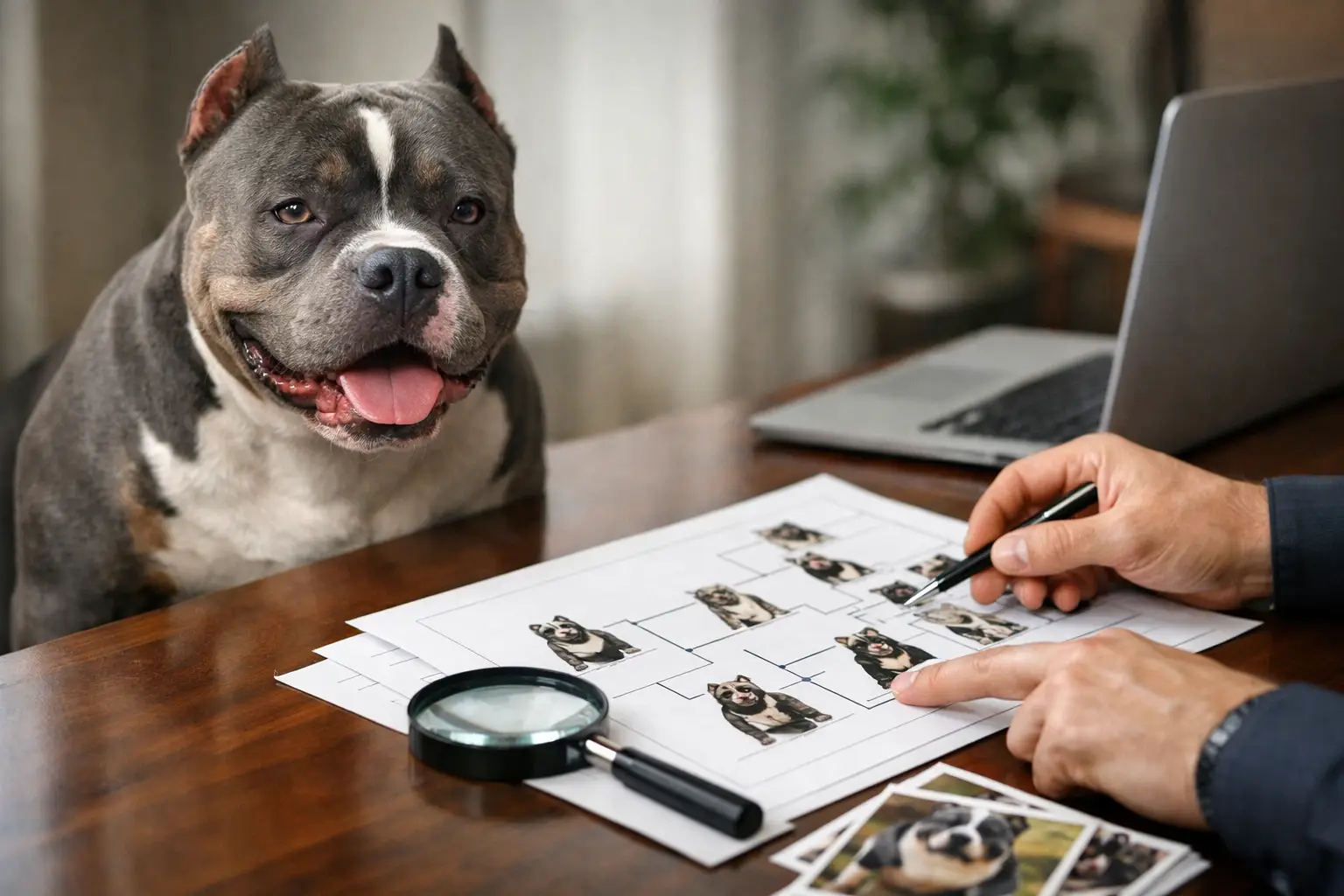
A good place to start is with the first three generations. That is where you will usually get the clearest picture of what is being built. Ask yourself whether those dogs complement each other or clash. If one side is known for mass and bone while the other is cleaner and more athletic, the breeding may be trying to balance extremes. That can be smart. It can also create inconsistency if the breeder is chasing too many traits at once.
Pedigree evaluation also means looking at the dogs behind the paperwork. Photos help, but video, production records, and offspring from earlier breedings tell you much more. A stud may look phenomenal in one stacked photo and still throw inconsistent pups. A female may not be famous, yet produce litter after litter with strong heads, good fronts, stable temperaments, and real presence.
Bloodline reputation matters, but only to a point
In this breed, names like Gotty, Razor’s Edge, and Greyline carry weight because they shaped the modern American Bully in major ways. Those bloodlines helped define size, build, style, and broad appeal. But reputation should open the conversation, not end it.
A bloodline with strong market recognition can increase demand and resale value, especially for breeders. It can also help predict general type. But old reputation does not always reflect current quality. Overused studs, careless pairings, and trend-based breeding can weaken what made a line desirable in the first place.
That is why you want to know not just what line appears in the pedigree, but how recently and how strongly. A dog with a famous bloodline buried several generations back is not the same as a dog linebred around proven stock that still shows those defining traits today.
Structure should match the pedigree claims
If a pedigree is supposed to represent elite XL or XXL American Bullies, the dog should show the structure to back it up. That means balanced proportions, heavy bone, solid topline, strong rear, wide chest, and a headpiece that fits the body without looking exaggerated to the point of weakness.
The key word is balance. Bigger is not always better if movement is poor or the dog lacks stability. Extreme mass can be appealing, especially in this breed, but structure still has to hold up. A bully with an impressive build and poor feet, weak pasterns, or bad movement may carry more risk than value.
This is where pedigree and phenotype should line up. If multiple dogs in the lineage show the same strengths – broad frame, clean front assembly, thick rear, stable gait – that pedigree is doing its job. If the paperwork says powerhouse and the dog in front of you looks inconsistent, pay attention to what your eyes are telling you.
Temperament is part of pedigree quality
A strong American Bully should turn heads, but that is only half the story. These dogs also need to live well with people. For family buyers, that means confidence, affection, patience, and social stability. For breeders, temperament matters just as much because unstable behavior can be passed forward and damage an entire program.
When evaluating pedigree, ask what the line is known for around children, strangers, and other dogs. No breeder should promise that every dog will act exactly the same, because temperament is shaped by genetics, environment, training, and early socialization. Still, stable patterns matter. If a line consistently produces confident, people-oriented dogs, that is a major plus.
A premium pedigree is not just about producing a muscular dog with rare color. It should also support the breed’s value as a loyal, loving companion.
Health testing separates serious programs from paper-only breeding
If you really want to know how to evaluate bully pedigree, pay close attention to health work. Registration papers matter. Champion names matter. Neither replaces health screening.
A pedigree can look elite and still hide problems if breeders are not testing and selecting responsibly. Ask about common concerns tied to the dogs in the lineage, including joints, breathing, heart health, skin issues, and overall soundness. Ask whether the parents are thriving adults, not just eye-catching young dogs.
There is a difference between breeding for a photo and breeding for a future. Serious programs prove that their dogs can grow, mature, move, and live as strong companions. That is what gives a pedigree real value over time.
Look for production, not just potential
One of the smartest ways to judge a bully pedigree is to study what it has already produced. Proven production tells the truth fast. If a stud or female has thrown multiple litters with the same strengths, that is worth more than big promises.
Consistency is the gold standard. Can the line reproduce head type, bone, chest, size, color, and temperament across different pairings? Or was there one standout pup that everyone keeps marketing while the rest of the litter was average? Those details matter.
For buyers who want a future breeding prospect, production history carries even more weight. You are not only buying the puppy in front of you. You are buying the likelihood of what that dog can become and what it may produce later.
Pedigree value depends on your goal
Not every buyer should evaluate pedigree the same way. If you want a family companion, your focus should lean toward temperament, health, sound structure, and breeder consistency. You may appreciate a famous pedigree, but you do not need to chase the most marketable name if the dog is healthy, stable, and fits your home.
If you are buying for a breeding program, you need to go deeper. Study linebreeding, outcrosses, production history, registration, and how specific pairings may strengthen or weaken your direction. Color may matter in the market, but structure and consistency should carry more weight if you want long-term credibility.
That is why experienced kennels do not build around one trait. They build around a total package.
Red flags when evaluating a bully pedigree
Be cautious if a breeder talks only about color and size while avoiding structure, health, or temperament. Be cautious if they show paperwork but cannot show the parents clearly, explain the pairing, or discuss what the line tends to produce.
You should also question pedigrees packed with famous names if the actual dogs are mediocre. A good breeder knows the difference between using a name for marketing and using a bloodline with real purpose. At Showtime Bullies, that distinction matters because serious buyers are not just chasing paper – they are looking for substance they can see in the yard and live with at home.
A pedigree should create confidence, not confusion. If it raises more questions than answers, keep looking.
The best pedigree is not always the loudest one. It is the one that keeps proving itself in structure, temperament, health, and consistency, generation after generation. When you learn to read it that way, you stop shopping for hype and start choosing quality with your eyes open.
A great bully pedigree should give you pride on paper and peace of mind in real life.