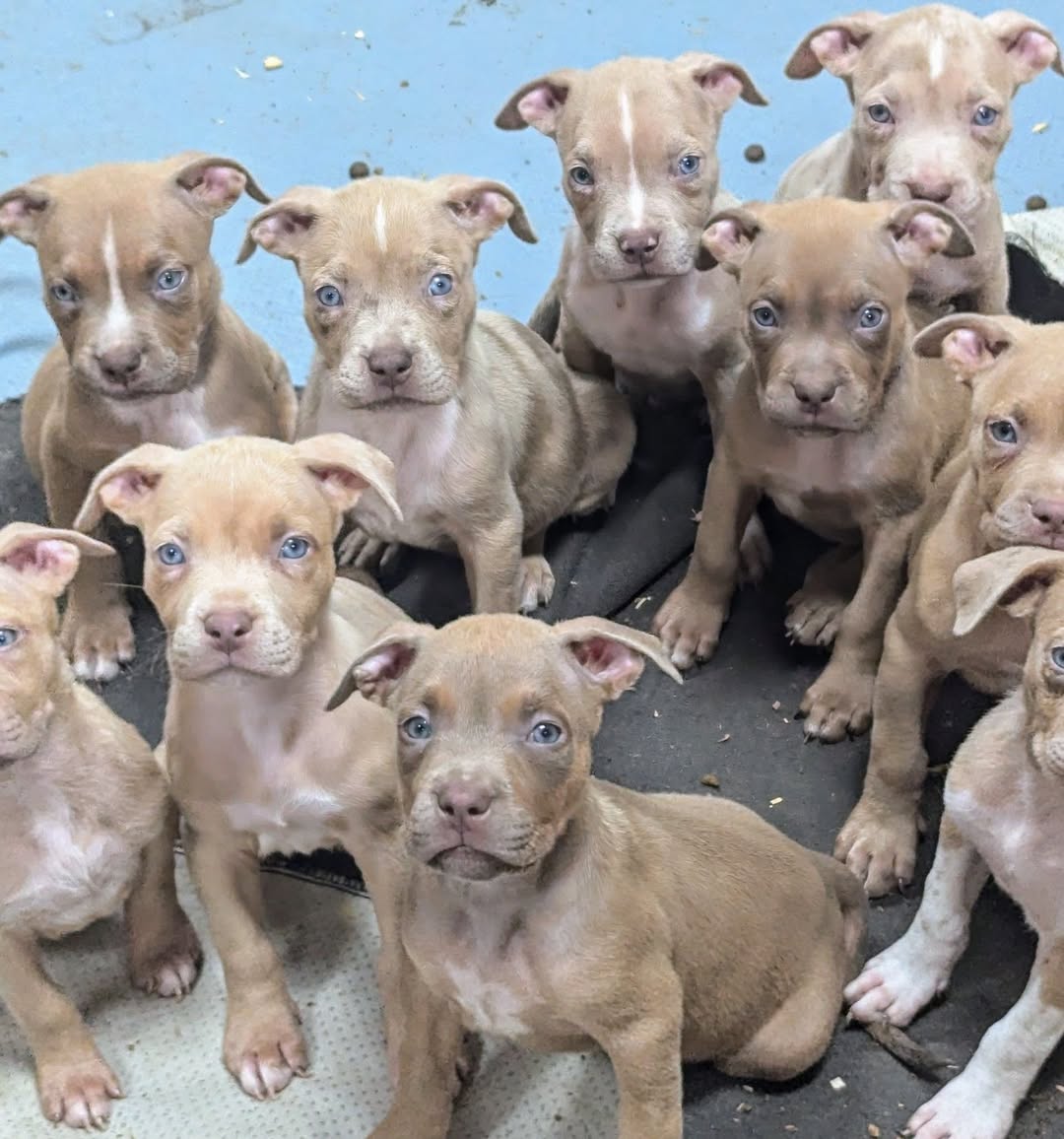
A stacked photo can show width, muscle, and an impressive headpiece. It cannot tell you how a dog carries its body across the ground. Learning how to assess bully movement gives families and breeders a clearer view of functional structure, comfort, and long-term potential before they make a commitment.
For Showtime Bullies, movement belongs in the same conversation as pedigree, temperament, health information, and overall type. A powerful Brazilian Bull should still move with purpose and coordination. The same is true of an XL American Bully, although these are separate breeds with separate breeding programs, histories, and development goals. Strong movement does not mean a dog must move like a light-framed sporting breed. It means the dog should use its body efficiently for its own build.
Start With a Natural, Unrushed Walk
The most useful movement evaluation starts when the dog is relaxed. Watch the dog walk on a flat, non-slip surface with enough room to travel in a straight line. Avoid making a judgment from a few steps on slick flooring, rough ground, or a tight leash. A dog that is excited, frightened, overheated, or pulling hard can look different from its normal self.
Ask to see the dog from the side, coming toward you, and moving away from you. Each view answers a different question. The side view shows reach, drive, topline stability, and overall balance. The front and rear views help you see whether the legs track in a reasonably straight, coordinated path.
A sound, mature bully-type dog should appear comfortable in motion. Its stride should look even rather than short, choppy, or guarded. The back should remain reasonably stable without excessive bouncing or collapsing through the middle. The dog does not need to move with dramatic flash. Efficient, willing movement is more valuable than exaggerated action.
How to Assess Bully Movement From Every Angle
Watch the side gait for balance
From the side, look for a front assembly and rear assembly that work together. The front leg should reach forward without the dog lifting its feet unusually high, paddling outward, or taking tiny restricted steps. Behind, the dog should push off with enough drive to move forward smoothly instead of shuffling.
Pay attention to the topline as the dog moves. A stable back supports efficient movement, while a severe dip, hump, or dramatic rocking motion deserves a closer look. Some body motion is normal in a broad, muscular dog, especially at a walk, but the dog should not appear to be fighting its own structure.
The head and neck also matter. A dog may lower its head slightly as it finds balance, particularly at a faster walk or trot. That is not automatically a concern. What you do not want to see is a dog constantly throwing its head upward, twisting its body, or bracing through its neck to compensate for discomfort or poor coordination.
Watch the front for clean tracking
As the dog comes toward you, the front feet should land in a coordinated pattern. In a broad, mature dog, the front legs may not travel as narrowly as those of a leaner breed. What matters is that the dog is not crossing dramatically, swinging each leg far out to the side, or collapsing at the wrists.
A slight turn in a foot can occur, and one brief uneven step does not define a dog. Movement must be judged over several passes. Repeated toeing in, toeing out, paddling, or instability can indicate a structural issue, poor conditioning, fatigue, or an injury that deserves professional evaluation.
Watch the rear for strength and control
From behind, look for rear legs that move with control and a consistent push. The hocks should not swing excessively inward or outward, and the rear feet should not cross sharply over one another. A dog that repeatedly bunny-hops, carries one leg differently, or loses rhythm during a simple walk should not be dismissed as merely clumsy.
Muscle can make a rear look impressive when the dog is standing still. Movement reveals whether that muscle is being used effectively. Functional rear structure supports steadiness, propulsion, and a more natural stride.
Know What Is Normal for Puppies
Puppies are not finished dogs. Their legs can look long one month, their rear can look higher the next, and their coordination can change quickly as they grow. A young puppy may be loose, playful, and temporarily awkward during a growth stage. That is why evaluating puppy movement requires patience and context.
When viewing a puppy, focus less on a perfectly polished gait and more on willingness, comfort, and basic coordination. The puppy should move freely, bear weight evenly, engage with its environment, and recover easily after play. Persistent limping, reluctance to use a leg, obvious pain, or a major imbalance should always lead to a conversation with a veterinarian.
Responsible breeders monitor development instead of promising that every puppy will look or move exactly the same at every stage. Genetics matter, but nutrition, appropriate exercise, growth rate, environment, and injury history can all influence how a young dog develops.
Separate Structure From Conditioning
A lean dog can have excellent structure, and a heavily muscled dog can have limited movement. Conditioning changes what you see. Dogs carrying excess body weight may tire quickly, shorten their stride, or place more stress on their joints. A dog that has been confined, recently transported, or taken out in Florida heat may also move less freely than usual.
For that reason, ask for more than one view when possible. Short videos from different angles, taken at a normal pace on level ground, can be more useful than heavily edited clips. If you are evaluating a breeding prospect or an adult dog for a serious placement, seeing the dog move on more than one occasion provides better information than a single presentation.
Do not confuse bulk with strength. The right condition allows a dog to show its frame, maintain endurance, and move without obvious strain. This is especially relevant in muscular breeds, where visual mass can hide the way joints and feet are working.
Brazilian Bull and XL American Bully Movement Are Not Interchangeable
Brazilian Bulls are the future-facing focus at Showtime Bullies, developed from imported Brazilian dogs, selected bloodlines, and intentional pairings. As the program grows in the United States, evaluation should remain centered on the individual dog: its structure, temperament, pedigree, health documentation, and ability to move comfortably within its own breed type.
XL American Bullies remain an established part of the kennel’s history and current program. They should be assessed on their own structure and pedigree, not treated as Brazilian Bulls under another name. Both can be substantial, athletic-looking dogs, but neither breed should be judged solely by size, color, head shape, or a posed photograph.
For either program, movement is one piece of a complete evaluation. A dog with a strong gait still needs a stable temperament, clear documentation, appropriate health consideration, and a placement that matches the family’s experience and lifestyle. Likewise, a dog with a minor cosmetic imperfection may still be a wonderful companion if it is comfortable, healthy, and honestly represented.
Red Flags That Deserve a Better Look
No buyer should attempt to diagnose orthopedic conditions from a video. Still, certain patterns are worth asking about rather than ignoring:
- Repeated limping, skipping, bunny-hopping, or refusing to bear weight on a leg
- Clear discomfort when rising, turning, climbing, or settling into a sit
- A gait that remains severely uneven across several calm passes
- Excessive wobbling, frequent stumbling, or difficulty controlling the rear
- A breeder who will not show ordinary, unedited movement or discuss the dog’s health information
These signs do not automatically establish a cause. A sore paw, a minor strain, fatigue, or an unfamiliar setting can change the way a dog moves. But a transparent breeder should be prepared to answer reasonable questions and recommend veterinary guidance when a concern is beyond what a visual assessment can confirm.
Ask Better Questions Before Placement
A thoughtful conversation is part of the evaluation. Ask how the dog is exercised, whether there has been any injury history, what health information is available, and whether you can see the dog walking naturally. For a puppy, ask about its current development, the parents’ structure and temperament, and how the litter has been raised.
If you are considering a breeding prospect, raise the standard. Review pedigree information, breeding role, documentation, physical condition, and movement together. One attractive trait should not outweigh the rest of the dog. Planned breeding decisions require a long view, particularly when building a program around imported foundation stock and carefully selected pairings.
A well-bred bully should look powerful without looking burdened by its build. Take your time, watch the dog more than once, and trust clear information over a quick sales pitch. The right dog is not simply the one that photographs the biggest – it is the one whose structure, temperament, and everyday movement fit the life and purpose you have in mind.