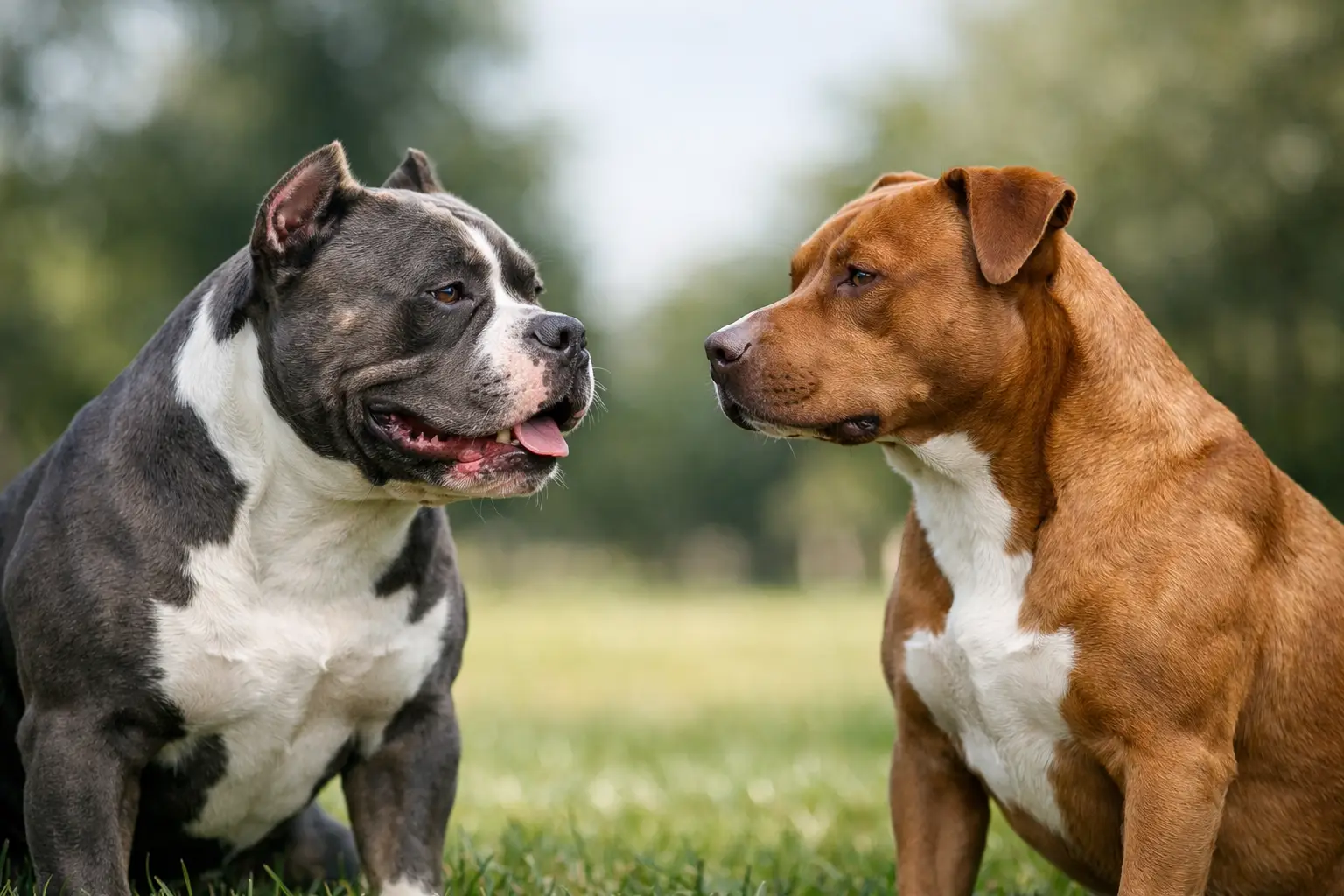
A lot of buyers come in asking the same question after seeing a thick, blocky bully in person – is the temperament really different, or is it just the look? When people compare american bully vs pitbull temperament, they are usually trying to answer one real-life question: which dog fits my home, my kids, my schedule, and my expectations better?
That is the right question to ask. Temperament is where flashy photos stop mattering and everyday life begins. A dog can have elite structure, impressive muscle, and standout color, but if the personality does not match the household, it is the wrong fit.
American Bully vs Pitbull Temperament at a Glance
The short answer is that American Bullies are generally bred to be more easygoing, more social in the home, and more family-centered in their day-to-day behavior. Pitbull-type dogs often bring more drive, more intensity, and more athletic energy. That does not make one better than the other across the board. It means they tend to suit different owners.
The American Bully was developed with companionship in mind. A well-bred bully should be confident, stable, affectionate, and comfortable being part of family life. These dogs are known for their people focus. They want to be near their owners, involved with the household, and included in the action, whether that means playing in the yard or laying at your feet.
Pitbull-type dogs can also be deeply affectionate and loyal, but they often carry a higher level of intensity. Many are more driven, more energetic, and quicker to react to excitement in their environment. In the right hands, that can be a huge plus. For an owner wanting a powerful athlete with a lot of spirit, that temperament can be ideal. For a family wanting a calmer companion, it may feel like more dog than they bargained for.
Why the Temperament Difference Exists
A big part of the american bully vs pitbull temperament conversation comes down to breeding goals. These dogs did not become distinct by accident.
American Bullies were built to combine striking muscle and presence with a more manageable companion temperament. Responsible breeders focus heavily on confidence, stability, tolerance, and social behavior around people. The goal is a dog that looks powerful but lives well as a family companion.
Pitbull-type dogs come from older working roots that emphasized grit, athleticism, and drive. Because that label gets used loosely, temperament can vary a lot depending on the exact dog, bloodline, and breeder. Some are extremely stable and family-friendly. Others are more intense and require a more experienced handler.
That is why broad statements can only go so far. Bloodline matters. Socialization matters. Early handling matters. Breeding standards matter. A poorly bred American Bully can be unstable, and a well-bred pitbull can be outstanding with a family. Still, when you compare the breeds as buyers usually do, the American Bully is often the more naturally relaxed option.
Family Life and Temperament in the Home
This is where American Bullies tend to win over families. A well-bred bully is often affectionate, patient, attention-loving, and eager to bond. They usually thrive on human contact and fit naturally into homes where the dog is treated like part of the family.
Many families want a dog that looks impressive but behaves with a steady, loving attitude around the house. That is exactly why the breed has become so popular. American Bullies often carry a gentle nature behind that heavy structure. With proper training and socialization, they can be playful with kids, loyal with adults, and calm enough to settle well indoors.
Pitbull-type dogs can absolutely be loving family dogs too, but they may bring more bounce, more stimulation needs, and a little less off-switch in some cases. That matters when you have a busy home, small children, or people who are not experienced with strong dogs.
The trade-off is simple. If you want a dog that may be more athletic and intense, a pitbull-type dog can be a strong match. If you want a thick, impressive dog that is often bred to be more laid-back in the home, the American Bully usually lines up better.
Energy Level and Reactivity
Temperament is not only about affection. It is also about how a dog handles excitement, frustration, strangers, and everyday stimulation.
American Bullies typically have moderate energy compared to many pitbull-type dogs. They still need exercise, structure, and training, but they are often easier for average families to manage. Many bully owners love the fact that these dogs can enjoy outdoor time and activity, then settle down and relax with the family.
Pitbull-type dogs often lean more athletic and higher output. They may need more physical exercise, more mental work, and more consistent outlets to stay balanced. Without that, high energy can turn into frustration, destructive behavior, or overexcitement.
Reactivity is another area where breeding quality really shows. A stable American Bully should be confident, not nervy. Bold, not chaotic. Social, not unstable. That same standard applies to pitbull-type dogs, but because the label covers such a broad range, consistency can be harder to predict unless you know the breeder and the line well.
Trainability and Handling Style
Both types of dogs are smart. Both respond well to confident, fair handling. Neither should be raised without boundaries.
American Bullies usually do best with structured, positive training that starts early. They are strong dogs, and their size alone means manners matter. The good news is that many are highly people-oriented, which makes them eager to connect and willing to learn when training is consistent.
Pitbull-type dogs can be extremely trainable too, often with a lot of drive and enthusiasm. But that same intensity can make them less forgiving of inconsistent handling. If the owner is unclear, lazy, or reactive, the dog may reflect that.
For first-time owners, the American Bully is often the more forgiving choice, assuming the dog comes from a breeder who prioritizes temperament, early socialization, and stable character. For more experienced dog people who enjoy a high-energy working style, some pitbull-type dogs may feel more engaging.
What Buyers Get Wrong Most Often
The biggest mistake is thinking appearance tells the whole story. A dog with massive bone, a wide chest, and an intimidating headpiece may still be soft with kids and deeply affectionate at home. On the other side, a leaner, athletic dog may be incredibly sweet but still require more management because of higher drive.
The second mistake is ignoring the source. Temperament is not random. It is shaped by genetics and by the first weeks of life. Puppies raised with high contact, proper exposure, and consistent human interaction are starting from a stronger place than puppies raised without structure.
That is one reason serious breeders put so much emphasis on socialization, health, and environment. At Showtime Bullies, the goal is not just to produce size and visual impact. It is to produce dogs that carry themselves with confidence and live well with their people.
Which Temperament Is Better for You?
If your priority is a family companion with standout looks, strong loyalty, and a more mellow everyday personality, the American Bully is often the smarter choice. This is especially true for buyers who want an impressive dog that can also settle into home life without needing nonstop output.
If your priority is athleticism, high engagement, and a dog that may bring more intensity to training and activity, a pitbull-type dog may fit better. That is not automatically a better or worse temperament. It is a different one.
Household rhythm matters too. A calm home with children, guests, and indoor downtime usually benefits from a stable, social bully temperament. A highly active owner who wants a dog for more demanding physical work may prefer the extra drive often seen in pitbull-type dogs.
The Bottom Line on American Bully vs Pitbull Temperament
When people compare american bully vs pitbull temperament, they are really comparing lifestyle compatibility. In general, the American Bully tends to be bred for a more companion-focused personality – affectionate, steady, confident, and family-ready. Pitbull-type dogs often bring more intensity, more athletic drive, and a little less margin for inconsistent ownership.
That is why breeder selection matters so much. The right bloodline can give you the power, presence, and loyalty people love in both types, but with a temperament that actually fits your daily life. The smartest buyers do not just shop for color, size, or pedigree on paper. They choose the dog whose mind matches its body, because that is the dog you will enjoy living with for years.