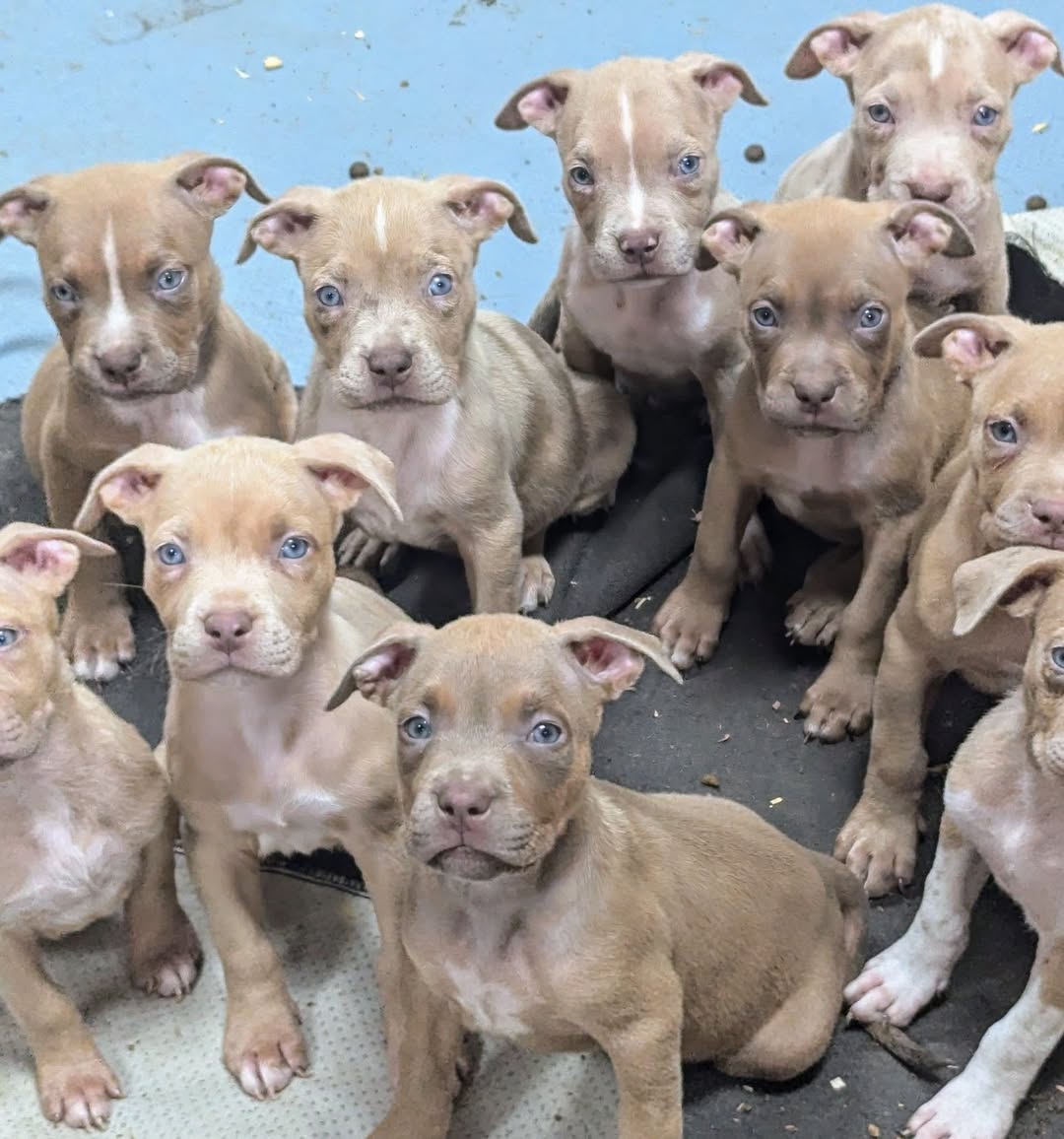
A bully puppy that looks bold can still be taking in the world one nervous detail at a time. That is why learning how to socialize bully puppies is not about showing off a confident pup in public as fast as possible. It is about building a dog that can handle people, noise, movement, other animals, and everyday pressure without becoming fearful, pushy, or overstimulated.
For XL and XXL American Bullies, that foundation matters even more. These are powerful, attention-grabbing dogs. When the structure is impressive and the head turns in every room, temperament has to match. A well-socialized bully puppy should be steady, engaged, family-friendly, and able to settle. That kind of confidence is built early, and it is built on purpose.
What socialization really means for bully puppies
A lot of owners hear the word socialization and assume it means letting the puppy meet everybody. That is only part of it, and sometimes it is the wrong part. Real socialization means teaching a puppy that new experiences are normal and manageable.
For bully breeds, that includes people of different ages, body types, and energy levels. It includes flooring changes, car rides, grooming tools, vet-style handling, city sounds, crates, leashes, doorbells, and calm introductions to stable dogs. The goal is not to create a puppy that runs up to everything. The goal is to create a puppy that can observe, process, and stay composed.
That distinction matters. An overexcited puppy is not always a well-socialized puppy. Sometimes that pup is simply overstimulated and rehearsing bad habits.
How to socialize bully puppies without creating stress
The best socialization is controlled, not chaotic. American Bullies are loyal, people-focused dogs, and many bond hard with their family early. That is a great trait, but it also means they need thoughtful exposure so they do not become overly suspicious, overly attached, or too intense in new environments.
Start with short sessions. A few quality exposures in a day beat one overwhelming outing every time. Let your puppy see the world in manageable pieces. Maybe that means sitting in a parked car near a busy area and rewarding calm behavior. Maybe it means visiting a friend’s house with one calm adult and one respectful child instead of a packed cookout.
Watch your puppy, not the plan. If your puppy is loose-bodied, curious, and able to take food, that is usually a good sign. If you see freezing, hard staring, backing away, excessive jumping, nonstop mouthing, or refusal to engage, the session may be too much. Confident socialization is built by giving the pup a win, not by forcing them to push through discomfort.
The best age to start socialization
The socialization window opens early. Puppies are especially receptive during the first few months of life, which is why responsible breeders put so much value on early handling, environmental exposure, and human contact before the puppy ever goes home.
Once your puppy is with you, continue that work right away. Do not wait until the dog is bigger, older, or more stubborn. The habits you build at eight to sixteen weeks are often easier to shape than the habits you try to fix at eight to sixteen months.
That said, timing always has to respect health and vaccination guidance from your veterinarian. Socialization should never mean careless exposure. There is a difference between carrying your puppy through a hardware store, inviting healthy vaccinated dogs to your home, or practicing calm observation from a clean environment, versus putting a young puppy down in high-risk public areas. Smart owners protect health and build confidence at the same time.
People first, but not every person
One of the biggest mistakes owners make is allowing random strangers to crowd a bully puppy. Because the breed is striking and muscular even when young, people often want to touch, excite, and overhandle them. That is not always helpful.
Your puppy does not need to greet every person. Your puppy needs to learn that people exist and that their presence is not a threat. Some interactions should be direct and positive. Others should simply be calm observation from a safe distance.
Focus on quality. Introduce your puppy to confident adults, gentle children who can follow directions, and visitors who will let the puppy approach at their own pace. Reward calm behavior. If the puppy jumps, mouths, or gets too wound up, slow the interaction down. Socialization and manners grow together.
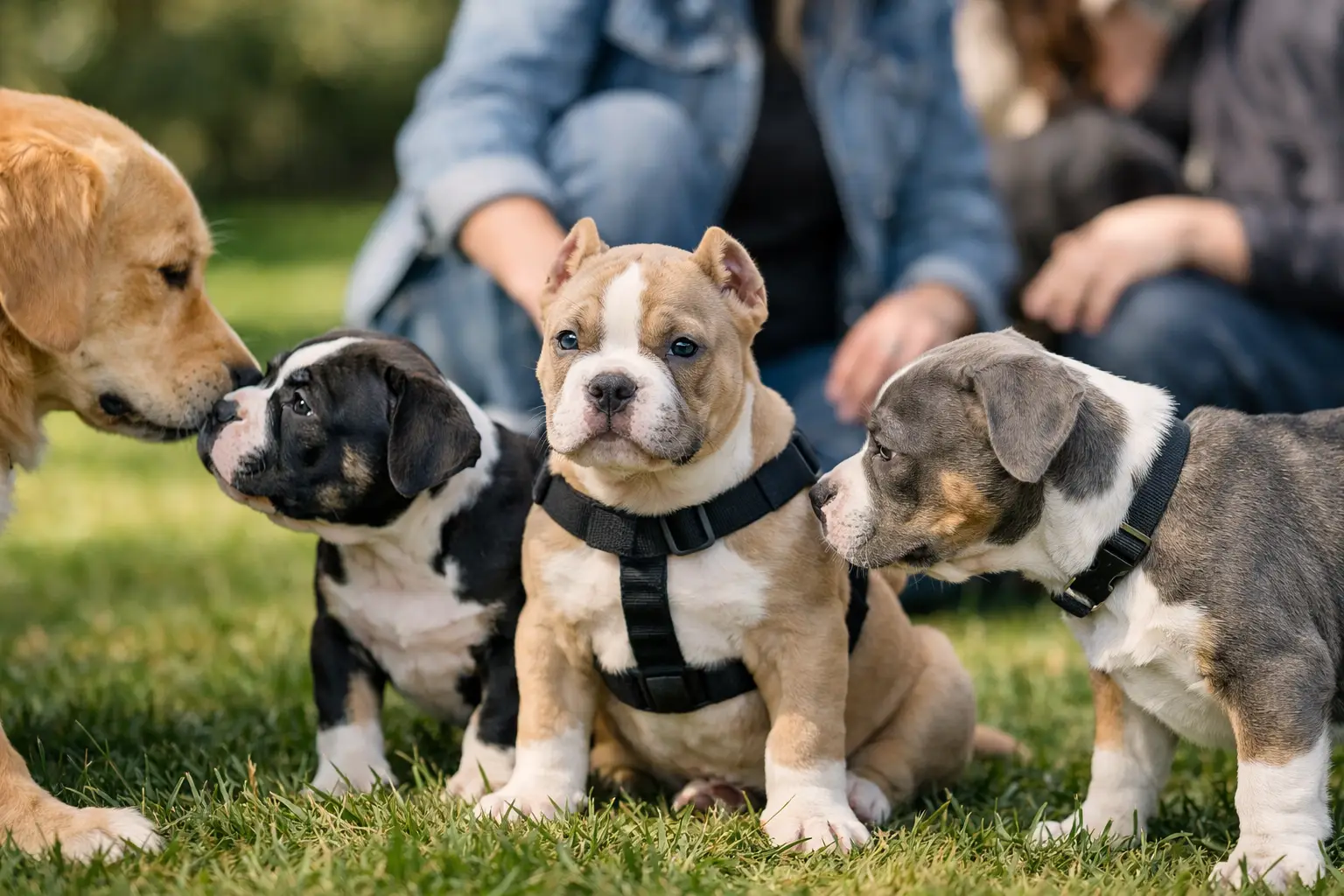
Dog-to-dog socialization should be selective
This is where a lot of bully owners get bad advice. Socializing your puppy does not mean turning them loose with every dog you see. In fact, poor dog interactions can create long-term issues faster than a lack of interaction can.
Choose stable, vaccinated, well-mannered dogs with good communication. Avoid chaotic dog parks, rough adolescents, and dogs that correct too hard or play without respect for size, space, or energy. A single bad experience can leave a strong impression, especially in a breed that is naturally alert and physically confident.
Good dog socialization teaches your puppy how to read another dog, respond to redirection, and regulate excitement. It should look balanced. There can be play, but there should also be pauses, recall, and the ability to disengage. If your puppy gets fixated, bulldozes other dogs, or cannot settle, the lesson needs more structure.
Handling, restraint, and body awareness matter more than most owners realize
If you want a bully puppy to mature into a calm, manageable companion, socialization has to include touch. Big, muscular dogs need to be comfortable with hands on their body, feet, ears, mouth, collar, and chest. Grooming, vet visits, nail trims, and everyday household management all depend on that comfort.
Make handling part of daily life. Touch the paws, check the ears, gently open the mouth, and reward cooperation. Practice brief restraint in a calm way. Introduce the leash, the crate, and different surfaces underfoot. These small routines build a dog that is not only friendly, but reliable.
This is especially important in a powerful breed. Size and structure are part of the appeal, but control is part of ownership. A dog that accepts guidance with confidence is far easier to live with than one that resists every form of management.
How to socialize bully puppies in everyday environments
Your puppy needs more than visitors in the living room. They need exposure to real life. That includes vacuum noise, door knocks, kids running past, car loading, outdoor traffic, and quiet time alone.
The best approach is to layer these experiences without flooding the puppy. Let them hear the blender from another room before moving closer. Let them watch bicycles at a distance before walking near them. Let them ride in the car for short trips before expecting them to relax on longer ones.
Confidence grows through repetition. A puppy that calmly experiences ten ordinary outings will usually develop better stability than one that attends one loud, high-pressure event for social media photos.
Training supports socialization
Socialization works best when the puppy also learns simple structure. Name recognition, recall, leash pressure, place, crate comfort, and basic engagement with the owner all help the puppy process new environments.
A puppy that checks in with you is easier to guide through distractions. A puppy that understands how to settle is less likely to spin into overexcitement. A puppy that can be redirected with food, praise, or leash guidance is easier to keep successful.
This is where serious breeding and serious raising meet. Great temperament is not just bloodline deep. It also shows up in the daily standards you keep. At Showtime Bullies, early socialization matters because it helps shape the kind of family companion people actually want to live with – impressive in structure, stable in mind, and loving in the home.
Common mistakes that set bully puppies back
Too much too fast is a common problem. Owners get excited, bring the puppy everywhere, and mistake overstimulation for confidence. The result can be a dog that becomes reactive, pushy, or mentally tired.
The other mistake is sheltering the puppy too much. Waiting until the dog is older can allow fear, suspicion, and environmental sensitivity to take root. There is a middle ground, and that is where the best results happen.
Another issue is rewarding chaos by accident. If your puppy is lunging, screaming, or wildly jumping to greet people and dogs, do not label that as being social. Calm is the standard. Curiosity is good. Engagement is good. Frenzy is not.
When to get extra help
Some puppies need more support than others. Genetics, litter dynamics, early experiences, and the home environment all play a role. If your puppy seems unusually fearful, intensely reactive, or hard to settle, bring in a qualified trainer early. Waiting rarely makes those issues easier.
The strongest owners are not the ones who pretend every problem will fix itself. They are the ones who recognize when guidance can protect the dog’s future.
A bully puppy with the right social foundation grows into something special – a dog with presence, power, and a clear head. Take your time, keep the experiences controlled, and build the kind of confidence that lasts long after puppyhood fades.