That first week with a new bully pup tells you everything. A well-bred American Bully puppy can be confident, playful, affectionate, and surprisingly observant from day one, but even the best puppy needs the right setup to settle in. If you are wondering how to prepare for bully puppy life before pickup day, the answer is simple: get your home, your schedule, and your expectations in order before your puppy ever walks through the door.
American Bullies are powerful dogs with people-focused temperaments. That combination is a big part of what makes them such outstanding family companions, but it also means preparation matters. A bully puppy is not just another item on your household checklist. This breed thrives when structure, socialization, and consistency are in place early.
How to prepare for a bully puppy before pickup day
The biggest mistake new owners make is focusing only on supplies. Yes, you need food and a crate. But the real preparation starts with environment and routine. A bully puppy does best in a home where rules are clear from the beginning. Decide now where the puppy will sleep, where potty breaks will happen, which furniture is off-limits, and who in the household is responsible for feeding, training, and supervision.
If one person allows rough play in the living room and another corrects it, your puppy gets mixed signals. If someone slips table scraps while another person is working on food manners, you create problems that are hard to undo later. These dogs are smart and eager to bond, so they learn patterns fast, both good and bad.
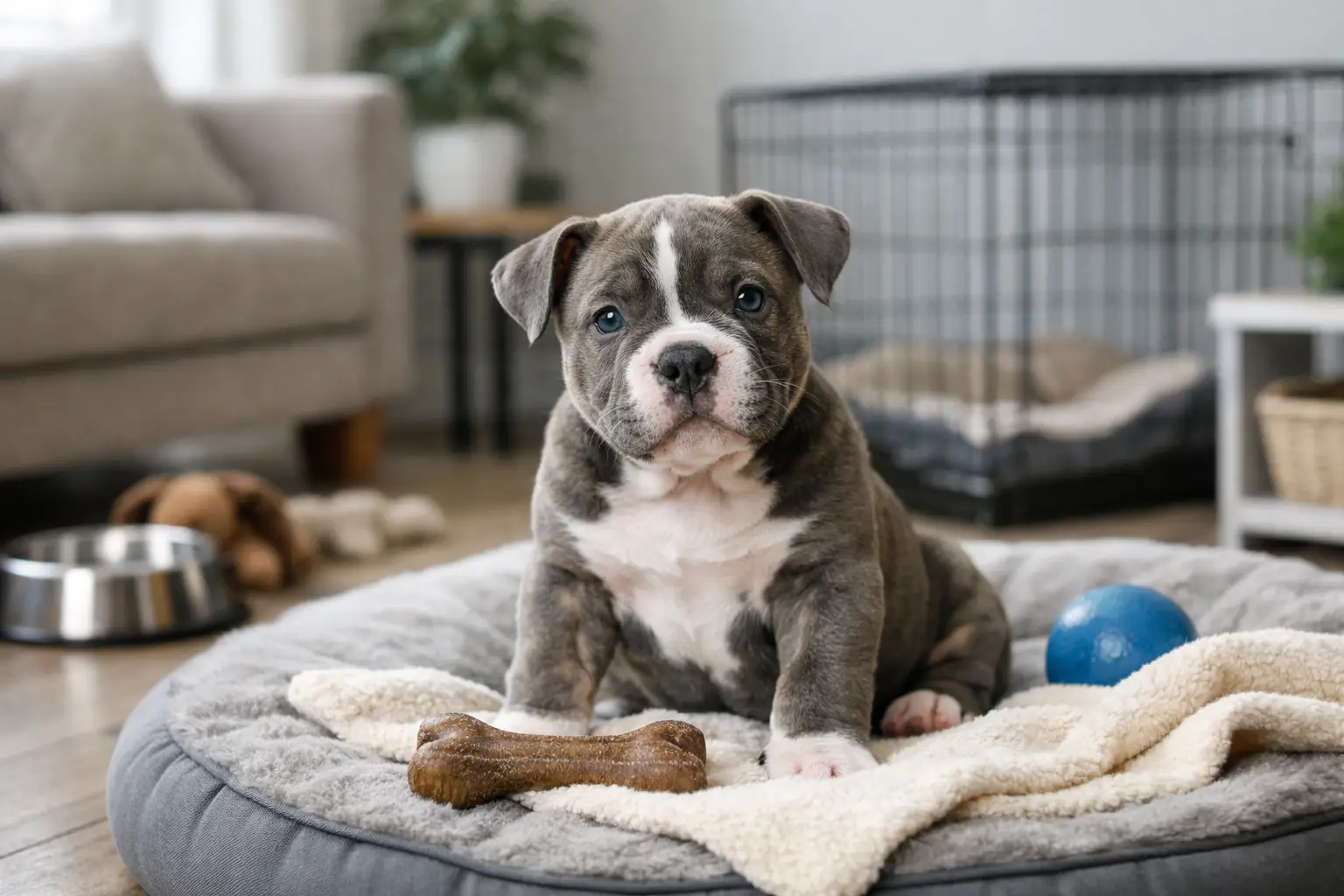
Set up one main puppy area before arrival. This should be easy to clean, easy to supervise, and free from hazards like cords, shoes, kids’ toys, and anything chewable. For many homes, that means a crate paired with a small pen or gated room. Giving a puppy full access to the house too early usually leads to accidents, overstimulation, and bad habits.
The right supplies for a strong start
Buy quality, not clutter. You do not need a mountain of gadgets. You need dependable essentials that support health, safety, and routine.
Start with a properly sized crate. It should be large enough for your puppy to stand, turn, and lie down comfortably, but not so large that one end becomes a bathroom. Add stainless steel food and water bowls, a durable collar, a sturdy leash, a few safe chew toys, enzymatic cleaner for accidents, and bedding that can handle wear. For a bully breed, flimsy toys rarely last long, even in puppyhood.
Food matters too. Ask your breeder exactly what the puppy is eating and stick with that food at first. A sudden switch can upset digestion, and the first week is not the time to create extra stress. If you plan to transition later, do it gradually.
Keep grooming basics on hand as well. That includes nail trimmers or a grinder, puppy-safe shampoo, and a soft brush. Even short-coated dogs need early handling around their paws, ears, and body so grooming stays easy as they grow.
Preparing your family for bully puppy ownership
A bully puppy should enter a calm, controlled home, not chaos. That is especially important if you have kids. Children and puppies can be a great match, but only if adults lead the interaction. Teach kids not to crowd the puppy, grab the face, climb on the dog, or interrupt meals and rest. Excitement is normal. Overhandling is not.
Adults need to be on the same page too. Who handles early morning potty trips? Who feeds lunch if the puppy is still on a multiple-meal schedule? Who manages training sessions? If the answer is “everyone,” it often means no one is truly consistent.
This is also the time to think honestly about your schedule. American Bullies are loyal, social dogs that want to be near their people. They are not the right fit for an owner who plans to leave a young puppy isolated for long stretches without a plan for potty breaks, exercise, and interaction. If you work long hours, arrange support early rather than scrambling later.
How to prepare for bully puppy training and socialization
Training starts the second your puppy gets home. Not at six months. Not once the puppy is bigger. Right away.
That does not mean harsh correction or unrealistic expectations. It means teaching routines, rewarding the behavior you want, and setting boundaries before bad habits take hold. Focus first on crate comfort, house training, name recognition, leash introduction, gentle handling, and basic engagement. Sit and down matter, but attention and impulse control matter more in the beginning.
Socialization is just as important, but it needs to be done with judgment. Good socialization is not letting your puppy meet every dog and every person in a crowded store parking lot. It is controlled exposure to sounds, surfaces, people, environments, and daily life while keeping the experience positive. A confident bully pup should learn that the world is normal, not overwhelming.
There is a trade-off here. Some owners try to protect a puppy so much that the dog grows up uncertain and reactive. Others overdo exposure too early and create stress. The right approach sits in the middle. Build confidence step by step, and do not confuse chaos with socialization.
Feeding, growth, and realistic expectations
A lot of buyers are drawn to XL and XXL American Bullies because of the size, structure, muscle, and presence. That is understandable. A well-built bully turns heads. But puppy growth should never be rushed.
Your job is not to force size. Your job is to support healthy development. Feed a consistent, quality diet, follow your breeder and veterinarian’s guidance, and monitor body condition rather than chasing a look too early. Overfeeding a growing puppy can create unnecessary stress on joints and structure.
This is where realistic expectations matter. Some bully puppies are naturally bold from day one. Others are a little softer and need time to settle. Some take to crate training quickly. Others protest for a few nights. That does not mean something is wrong. It means you have a young dog adjusting to a new environment.
Your home setup matters more than most people think
The physical setup of your home shapes behavior. If your puppy has a quiet resting area, clear potty access, and limited chances to rehearse bad habits, progress comes faster. If the puppy is constantly overstimulated, passed around, or left to roam, you will spend more time correcting than teaching.
Think through flooring, too. Slick surfaces can be challenging for some puppies, especially larger-boned dogs still learning coordination. Area rugs or runners can help provide better footing. Keep stairs limited at first if possible, and supervise any rough play that could lead to slips or awkward jumps.
If you already have another dog, do not assume instant friendship. Introductions should be calm and structured. Even friendly adult dogs can become annoyed by a puppy with no manners. Give both dogs space, monitor interactions, and avoid forcing contact.
Vet care, records, and the breeder handoff
Before pickup day, know where your puppy will receive veterinary care. Schedule the first wellness visit ahead of time so you are not searching once the puppy is already home. Keep vaccination records, registration paperwork, feeding instructions, and any health information organized in one place.
A serious breeder gives you more than a puppy. They give you a starting point built on health planning, temperament awareness, and early development. That matters with a premium breed where structure, genetics, and sound temperament are part of the value. At Showtime Bullies, that foundation is taken seriously, and buyers should match that same level of commitment once the puppy comes home.
The first 72 hours set the tone
When your puppy arrives, keep things simple. Do not invite a crowd over. Do not turn the day into a nonstop event. Let the puppy explore a limited space, offer water, stick to the current feeding schedule, and begin potty trips immediately. Calm leadership builds trust faster than excitement does.
Expect some adjustment. A puppy may whine the first night, eat a little less, or seem extra sleepy. That can be normal after a major transition. What matters is that you respond with patience and consistency instead of changing the whole plan every few hours.
The best bully puppies are set up to succeed, not just admired for their looks. Size, color, and pedigree get attention, but preparation is what turns potential into the kind of loyal, stable companion people really want. Get your home ready, get your mindset right, and give your puppy a strong start that matches the quality you invested in.