
The Blue Nose Pitbull

Breed Background
The American Pit Bull Terrier was originally developed as an athletic working dog known for strength, endurance, and loyalty.
When breeders focus on the blue coat gene, the resulting dogs are often referred to as Blue Nose Pitbulls due to their distinctive coloring.
Key traits of the breed include:
- Lean, athletic build
- Strong jaw structure
- High energy levels
- Deep loyalty to owners
- Intelligence and drive
Temperament
Properly bred American Pit Bull Terriers are known for:
- Confidence
- Loyalty
- Human bonding
- Trainability
However, as with any powerful breed, structure, temperament, and socialization play a major role in overall stability.
Responsible ownership and early training are essential.

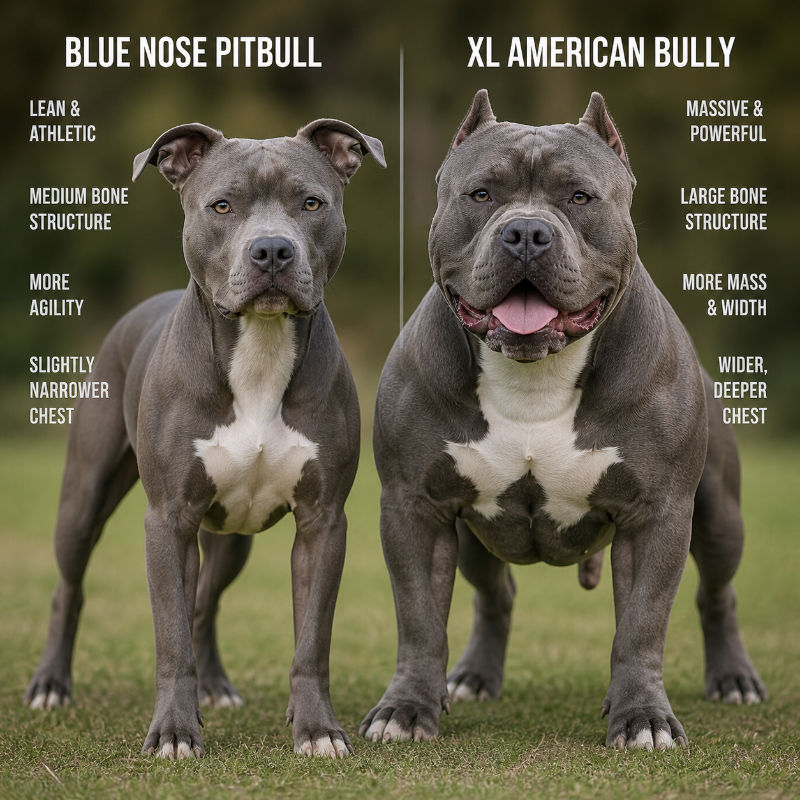
Structure Compared to XL American Bullies
Many people searching for Blue Nose Pitbulls are drawn to:
- The muscular look
- The blue-gray coat color
- The powerful appearance
However, there are structural differences between traditional American Pit Bull Terriers and the American Bully, particularly in the XL class.
XL American Bullies typically feature:
- Broader chest
- Heavier bone structure
- Wider head proportions
- More compact, dense build
- Lower energy drive compared to APBT lines
For families seeking a more substantial, wider-framed dog with a calmer household presence, the XL American Bully is often a preferred alternative.
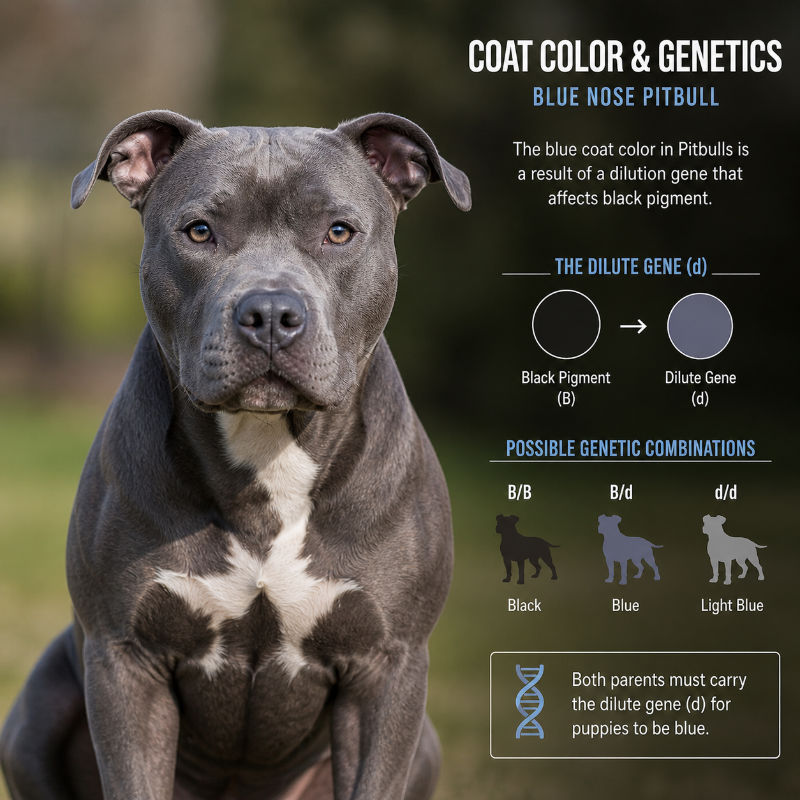
Coat Color & Genetics
The blue coat comes from a recessive dilution gene. When both parents carry the gene, puppies may display the gray/blue coloration.
It’s important to note:
Color alone does not determine quality.
Structure, health, and temperament should always take priority over coat color.
Choosing the Right Bully Breed
Whether considering a Blue Nose Pitbull or an XL American Bully, responsible breeding practices matter.
Key factors to evaluate in any breeder include:
- Health awareness
- Structural soundness
- Temperament stability
- Transparency in bloodlines
Understanding the differences between these closely related bully types helps buyers make informed decisions based on lifestyle and expectations.